

Starting a crochet business takes steady hook skills, a focused product line, honest prices and a place to sell. Self-employment is common in the craft, since the U.S. Bureau of Labor Statistics counted 58% of craft and fine artists as self-employed in 2025.
My name is Michal Sieroslawski, and I’m an entrepreneur who helps crochet businesses get recommended in AI search. When buyers ask ChatGPT for a crochet business, the names in the reply get the first look.
This order sets prices before money goes into yarn and fees. Safety and label rules come before the first toy or blanket ships. Below are the ten steps, in the order most crochet founders take them.
- Choose Your Crochet Products
- Study Buyers and Rival Shops
- Write a Short Crochet Business Plan
- Price Each Piece From Yarn and Time
- Fund the Starter Yarn and Shop Fees
- Register the Crochet Business
- Meet Toy Safety and Label Rules
- Stock Hooks, Yarn and Packaging
- Market the Shop to First Buyers
- Land in Google AI Overviews Gift Answers
1. Choose Your Crochet Products
Choosing crochet products decides what the shop makes, sells and ships every week. That choice shapes the yarn order, the price list and the buyers the shop attracts.
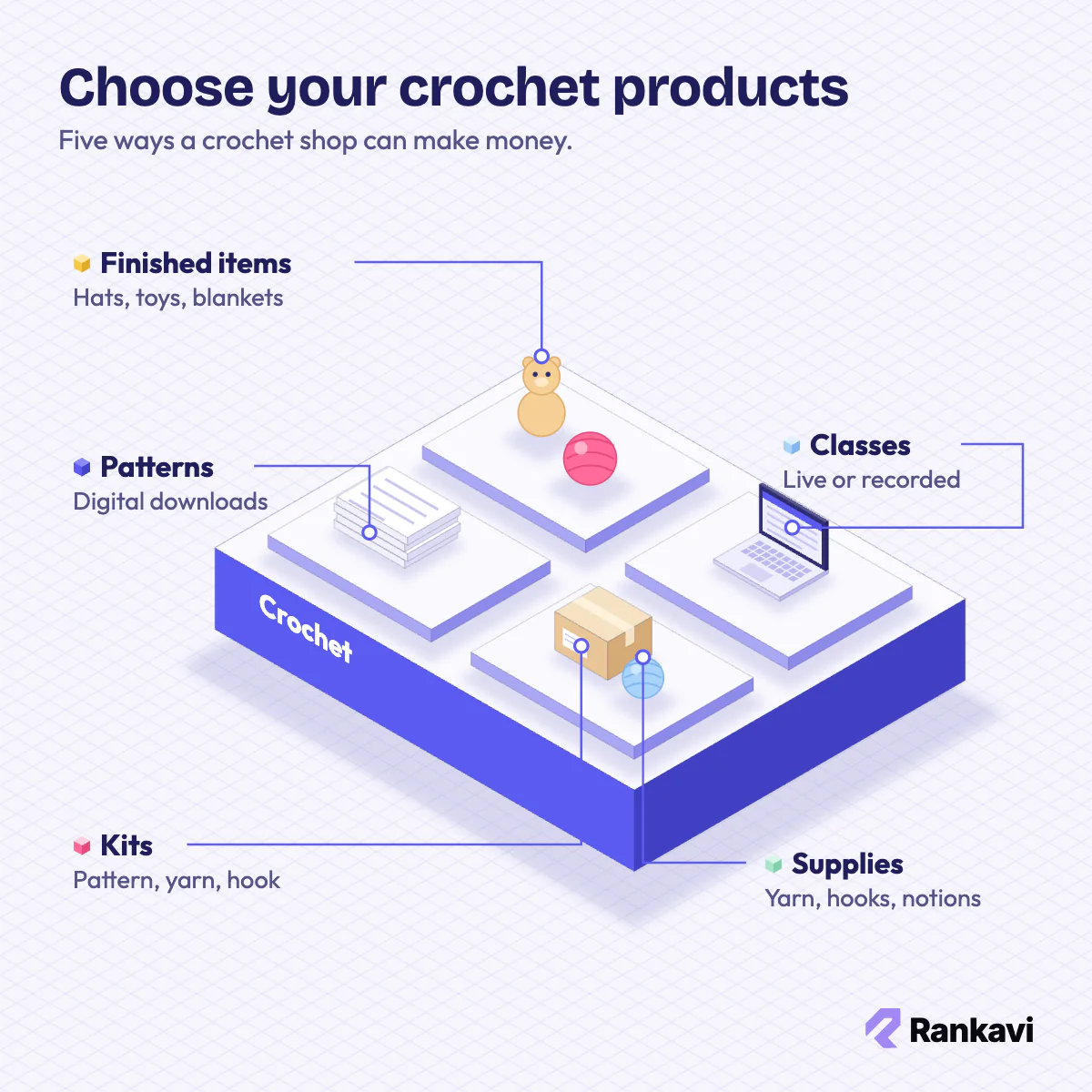
Common crochet business models:
| Model | What the shop sells |
|---|---|
| Finished items | Hats, blankets, amigurumi, baby items, home decor |
| Patterns | Digital instructions sold as downloads |
| Kits | A pattern, the right yarn and a hook in one box |
| Classes | Live or recorded lessons for beginners |
| Supplies | Curated yarn, hooks, stitch markers and notions |
Finished items earn money only while the maker’s hands work. Patterns and recorded classes work differently, because one file sells many times. Many crochet sellers mix both, adding patterns once orders outgrow their hours.
Kits and supplies need stock space and upfront cash. Classes need filming or teaching time, and patterns need test crocheting before release. The U.S. Bureau of Labor Statistics (BLS) publishes federal job data. Its May 2025 median wage for craft and fine artists was $55,290, a broad proxy.
Speed matters for handmade stock. Washcloths, coasters, hats and small toys sell well because they’re quick to make and appeal to many buyers. A slow, complex piece risks long gaps in stock.
Each shop also picks a selling rhythm. A made-to-order shop crochets after each sale. A drop-based shop builds a batch over weeks, lists it at once and ships right away.
2. Study Buyers and Rival Shops
Market research for a crochet shop starts on the marketplaces where buyers already shop. The goal is proof that people pay for the planned items.
Etsy is a marketplace where crochet makers sell handmade goods beside vintage sellers. Every Etsy shop page shows useful competitor data. Total sales, average rating and written reviews reveal which crochet items move and what buyers praise or dislike. Repeated complaints point to gaps a new shop can fill. Comparing prices on similar sizes and noting which variants sell most shows where a new shop can compete.
Ravelry is an online community and pattern database for knitters and crocheters. It shows which patterns and yarns makers discuss most. Pattern designers use it to test demand before writing a full design.
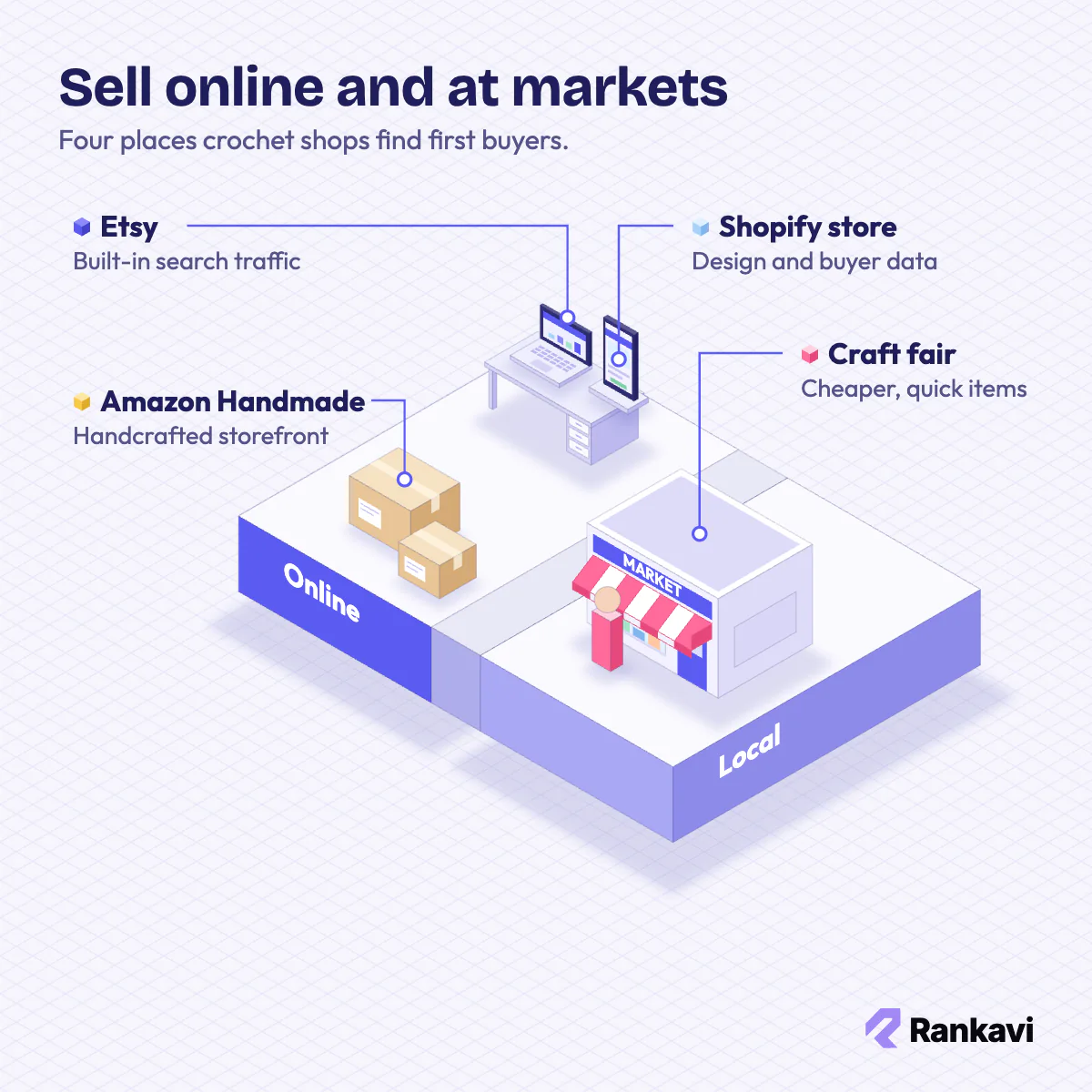
Local craft fairs and markets reveal a different buyer. A walk through a few stalls shows which items and prices sell in person. Cheaper, quick items tend to sell best at markets. A first market stall also works as a low-cost demand test before a larger stock purchase.
3. Write a Short Crochet Business Plan
A crochet business plan can fit on a few pages. It records what the shop sells, where it sells and when it expects a profit.
A short plan covers five core sections:
- Products and target buyers
- Sales channels
- Brand and marketing approach
- Budget and accounting method
- Time to profit and expected profit
The sales channel decision belongs here. Amazon Handmade is Amazon’s storefront for handcrafted goods, and it brings instant search traffic like Etsy. Shopify is an ecommerce platform that gives full control of design and customer data. Craft fairs and local boutiques add in-person sales.
A written plan protects the maker’s hours. Without one, a seller can spend weeks crocheting and photographing items that never sell. The plan sets a review date to change products or channels.
4. Price Each Piece From Yarn and Time
Pricing a crochet piece sets one figure that covers yarn, labor, overhead and profit. Handmade work underpriced at the start rarely recovers.
Finished items follow a simple build. The seller adds the cost of yarn and notions, the hours spent and a share of overhead. Hostinger, a web hosting company, wrote in August 2026 that many sellers start labor at $20 to $30 an hour. Shipping supplies count too, unless buyers pay a separate shipping fee.
Overhead per item comes from yearly costs. The seller totals annual expenses such as tools, website fees and tax preparation. That total divided by twelve, then by expected monthly sales, gives the overhead share per piece.
Patterns follow the market instead. Designers search similar patterns on Etsy and place their price near the average. A very expensive pattern earns more per sale but attracts fewer buyers.
Launch discounts help a new shop win early reviews. A 2026 Shopify guide described CrochetByGenna running 25% to 30% off sales at launch. Prices then rose as the shop built trust.
Shipping needs its own decision. A shop can charge it separately, build it into the price or offer free shipping above a set order size. Each choice changes the price shown. Bulky blankets and plush toys cost more to ship than hats.
Wholesale buyers expect a lower price than retail, so a wholesale price must still cover labor. Custom orders suit a deposit, and rush or personalized work suits a surcharge. A share of each sale is also set aside for taxes, so profit is not overstated.
Every price needs a review every few months as costs and seasons change.
5. Fund the Starter Yarn and Shop Fees
Funding a crochet business covers the yarn, tools and selling fees needed before steady sales arrive. Most crochet shops start small enough to fund from personal savings. Savings avoid interest but tie up personal money, while a credit card adds interest if sales start slowly.
The first budget covers yarn, hooks and notions, then custom labels and packaging. Marketplace or website fees, ads and accounting software follow.
A lean launch limits colors. Focusing on one or two yarn colors and a couple of designs keeps the first order small. Extra weights and colors add up fast.
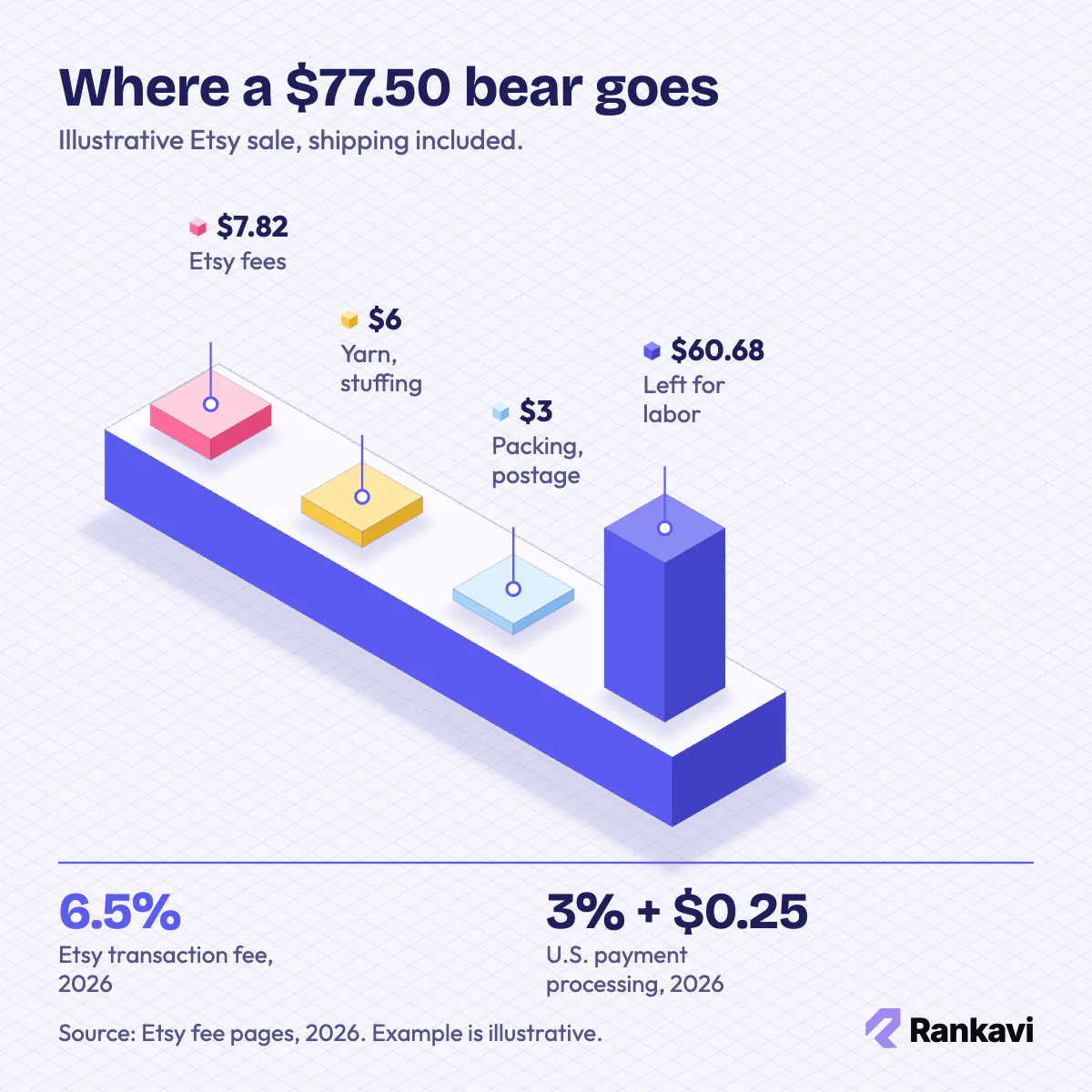
Selling fees are the benchmark most crochet sellers check first. As of 2026, Etsy charges U.S. sellers $0.20 per listing and 6.5% per transaction. Its 2026 payment processing fee adds 3% plus $0.25 per order. Those fees come out of every order, so the price list must absorb them.
Startup money at a glance:
| Item | Figure |
|---|---|
| Startup cost | Varies with yarn stock; no current published range |
| Main costs | Yarn, hooks, labels, marketplace fees, ads |
| Typical margin | 20% to 30% markup on total costs |
| Time to open | Depends on how much stock is ready to list |
Sources: Hostinger, a web hosting company, vendor estimate, August 2026 (markup); Etsy fee pages, 2026.
Worked example: An illustrative maker sells one amigurumi bear for $77.50, shipping included. Etsy fees take $0.20, $5.04 and $2.58, or $7.82 in total. Yarn and stuffing cost $6, and packaging and postage cost $3. That leaves $60.68, or about $24 an hour for a 2.5-hour bear.
6. Register the Crochet Business
Registering a crochet business means choosing a legal structure and a business name with the state. A single owner is a sole proprietorship by default.
A sole proprietor reports business income and expenses on a personal tax return. A limited liability company (LLC) is a separate legal entity, which can shield personal assets from business debts. Many small craft sellers stay sole proprietors at first.
A sole proprietor who sells under a shop name files a “doing business as” (DBA) name. An LLC can register any available name, and most states require “LLC” at its end.
The Internal Revenue Service (IRS) issues crochet sellers a free employer identification number (EIN) online. A separate business bank account keeps yarn purchases and shop income apart from personal money.
7. Meet Toy Safety and Label Rules
Product rules for crochet protect buyers and determine which labels each item carries. Toys and baby items face the strictest rules.
A local business license may apply, depending on the state, county and city. Most states also require a sales tax permit before the seller collects tax on direct sales.
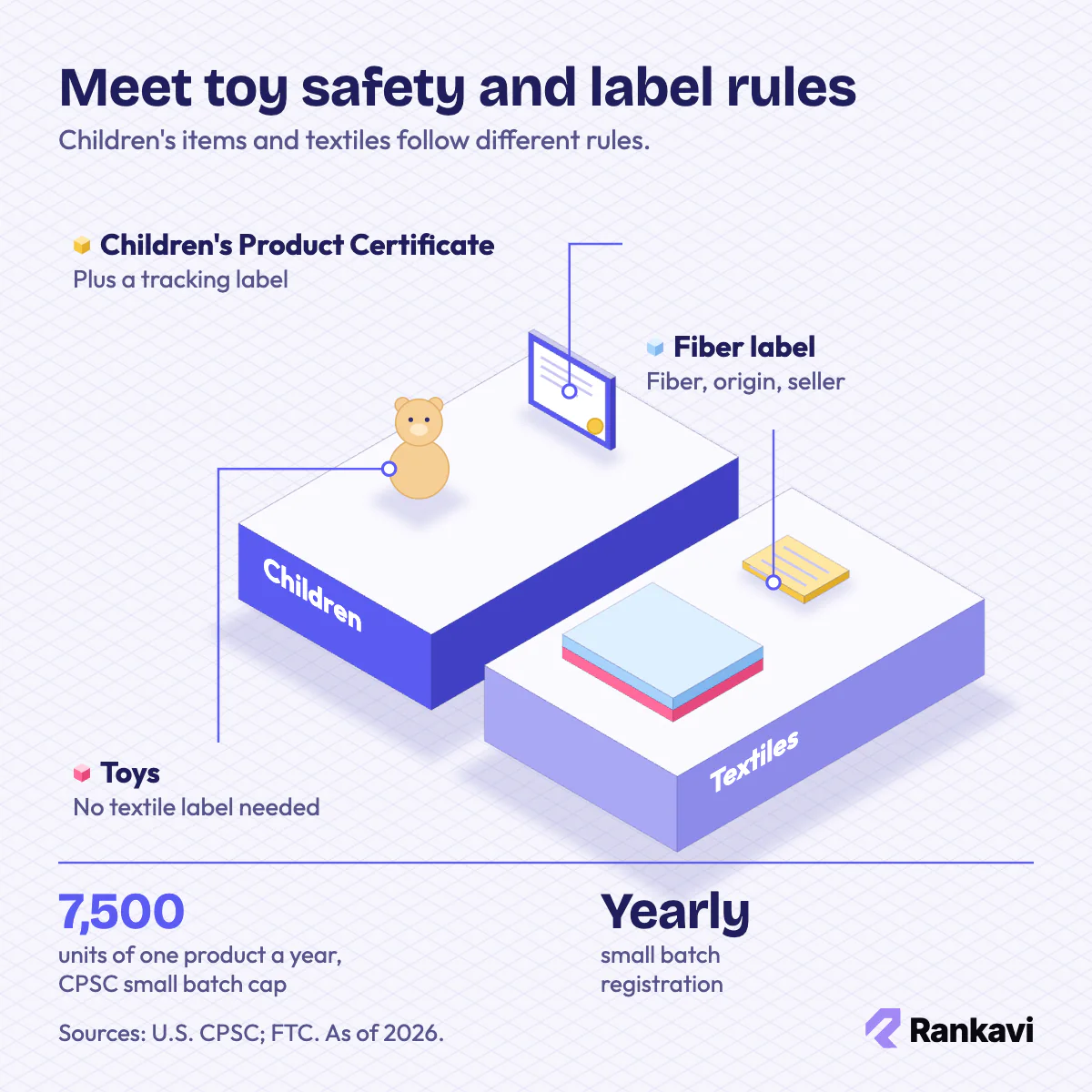
The U.S. Consumer Product Safety Commission (CPSC) sets safety rules for crochet items made for children. Each children’s product needs a Children’s Product Certificate and a tracking label. As of 2026, CPSC small batch status covers makers of no more than 7,500 units of one product per year. It eases some testing but requires yearly registration.
The Federal Trade Commission (FTC) enforces textile labeling rules for blankets, scarves and similar items. Labels list fiber content, country of origin and the seller’s identity. Hats and toys are exempt from these textile labels.
8. Stock Hooks, Yarn and Packaging
Supplying a crochet business involves buying the yarn, hooks and packaging that every order uses. Quality matters more than quantity at the start.
Yarn weight decides speed. A thicker yarn lets a maker finish projects faster, which keeps stock full. A few reliable yarn lines also make colors easy to reorder.
A quality hook makes long sessions easier on the hands. Ergonomic crochet hooks are a popular choice for makers who crochet for hours each day. Buttons and safety eyes finish many pieces.
Packaging and finishing supplies include four items:
- Custom labels
- Tissue paper and mailers
- Handwritten notes of thanks
- Coupons for repeat orders
Yarn colors can differ between dye lots, so a full order’s yarn is best bought together. A corner of the home works as the first studio. A larger shop may later rent a commercial space for stock and shipping.
9. Market the Shop to First Buyers
Marketing a crochet shop turns finished pieces into first sales and early reviews. Strong photos and clear branding do most of the early work.
A brand identity covers the shop name, logo, colors and voice. Baby items suit soft pastels and a playful tone. Vintage doilies suit a cottage style.
Photos sell crochet online, because buyers can’t touch the yarn. A phone camera and natural light are enough. Listings then need specific keywords, such as “nursery decor” or “baby shower gift,” not just “crochet.”
Social video builds a following over time. Process videos on Instagram, TikTok and YouTube attract viewers who enjoy watching items take shape. Small craft influencers also cost less to work with than broad ad campaigns.
A note in each parcel that asks for a review helps a new shop collect early feedback. Several listings help a new shop look active. A full shop gives each visitor more items to buy. Excellent customer service turns first buyers into repeat customers.
10. Land in Google AI Overviews Gift Answers
Gift shoppers now ask AI tools where to buy a handmade crochet baby blanket or a custom amigurumi. Google AI Overviews answer those questions with names pulled from trusted pages.
Those pages include gift guides, craft blogs, marketplace roundups and review sites. A new crochet shop that appears on them early has a better chance of being named in the answer.
Rankavi is a software as a service (SaaS) platform that publishes brand mentions in articles on indexed third-party websites. Its Google AI Overviews brand mention service places a shop name on pages that answer gift searches.