

Starting a car detailing business takes trained hands, a mobile rig or a bay, and insurance for customer cars. The U.S. Bureau of Labor Statistics (BLS), which publishes national job data, counted 380,430 cleaners of vehicles and equipment in May 2025.
My name is Michal Sieroslawski, and I help car detailing businesses become easier to find online. When drivers need a car detailing business, more of them now ask Gemini or ChatGPT first. Showing up there helps a new car detailing business reach people it would otherwise miss.
The order below settles the model and the prices before money goes into equipment. Paperwork and insurance then land before the first paid car. The ten steps below take a car detailing business from plan to launch.
- Choose a Mobile or Shop Detailing Model
- Price Detailing Packages by Vehicle Size
- Fund the Starter Kit and Plan
- Register the Detailing Company
- Get Local Permits and Wash Water Approval
- Insure Customer Cars and the Rig
- Buy Pressure Washers, Polishers and Chemicals
- Market to Local Drivers and Dealerships
- Hire Detailers and Add Premium Services
- Appear in Google AI Mode Detailing Answers
1. Choose a Mobile or Shop Detailing Model
A new detailer first picks between driving to customers and running a fixed bay. That choice sets the budget, the permits and the insurance for every later step.
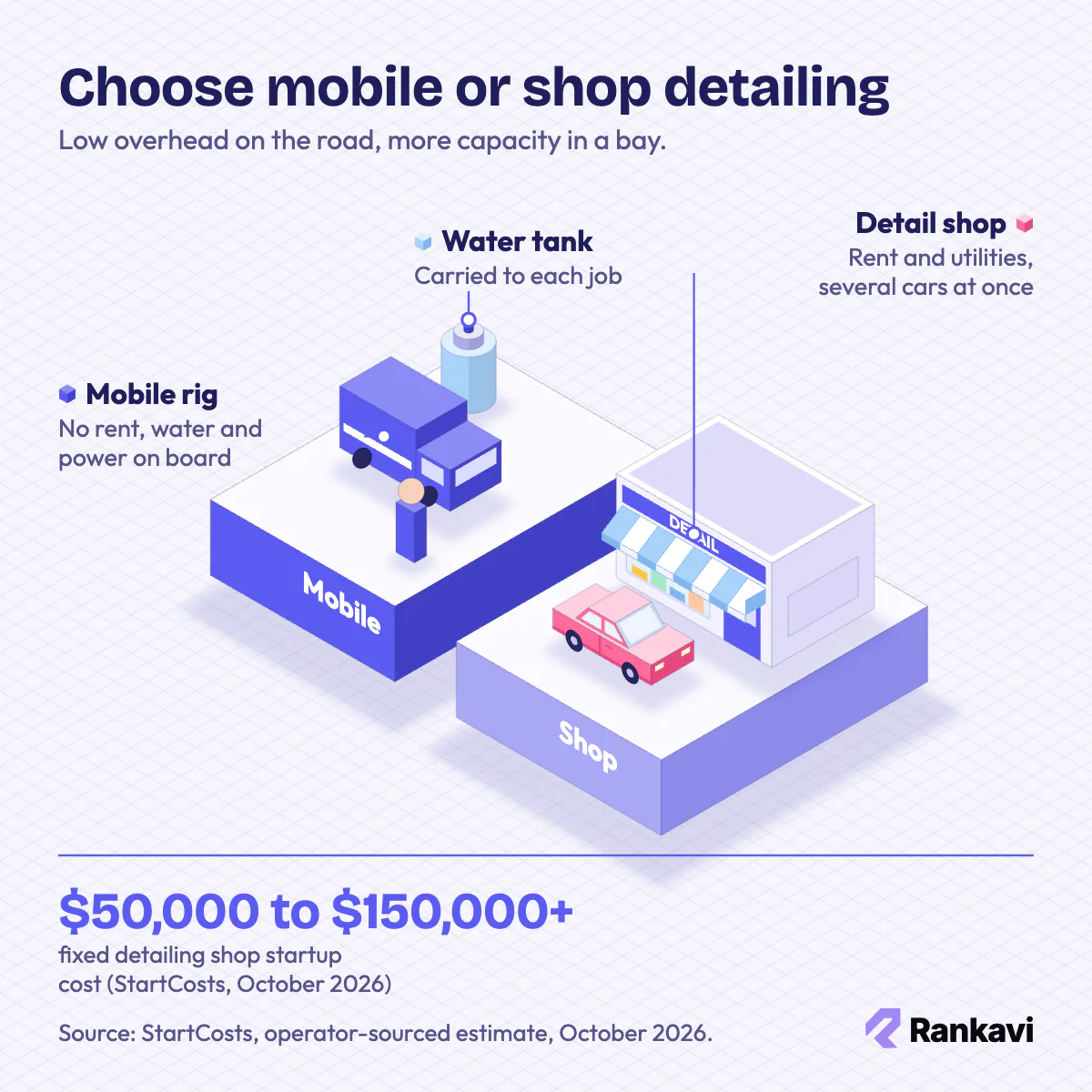
Mobile detailing brings the service to homes and offices from a van, truck or trailer. Overhead stays low because there is no rent. The rig needs its own water, power and a plan for runoff. A cargo van keeps tools dry and locked, while an enclosed trailer costs less but needs a tow vehicle.
A detail shop works from a rented bay with water, drains and lighting. StartCosts, which publishes startup cost guides built from operator figures, put a fixed shop at $50,000 to $150,000 or more in October 2026. In return, the shop holds several cars at once. A covered bay also suits paint correction and coatings, which dust, wind and sun can spoil outdoors.
Mobile vs shop detailing:
| Factor | Mobile detailing | Detail shop |
|---|---|---|
| Overhead | Low, no rent | High, rent and utilities |
| Water and power | Carried on the rig | Built into the bay |
| Capacity | One car at a time | Several cars at once |
| Best first step for | Owners with a small budget | Owners with savings and steady demand |
Access and weather limit mobile work. Some apartment complexes and homeowner associations bar washing on site, and rain can cancel outdoor jobs. Waterless and rinseless wash products help where hoses are banned.
The choice is not permanent. Many owners start mobile, build a client base, then rent a bay for coating work. Mobile suits a small budget, a short menu of washes and interiors, and a mild climate. A shop suits savings and coating-heavy demand.
Detailing covers cleaning, polishing and protecting a vehicle. Pinstriping, graphics and body moldings count as customizing, a separate trade. New owners do better with a short service menu than with every automotive service at once.
Skill comes before the first invoice. Many owners work at a dealership, car wash or detail shop first. Practice on family cars across paint types and leather, cloth and suede interiors builds that range.
A local check shows where the business fits. The owner visits nearby detailers and car washes, then notes their services, prices and reviews. Gaps appear quickly, such as no mobile service or no evening slots.
2. Price Detailing Packages by Vehicle Size
Pricing car detailing sets a package fee that covers products, labor time, travel and profit for each vehicle. Many detailers publish tiers and adjust them by vehicle size.
A tiered menu helps customers choose fast. A basic tier covers a wash, vacuum and windows. A full detail adds interior shampoo, clay and wax. A premium tier adds paint correction or a coating.
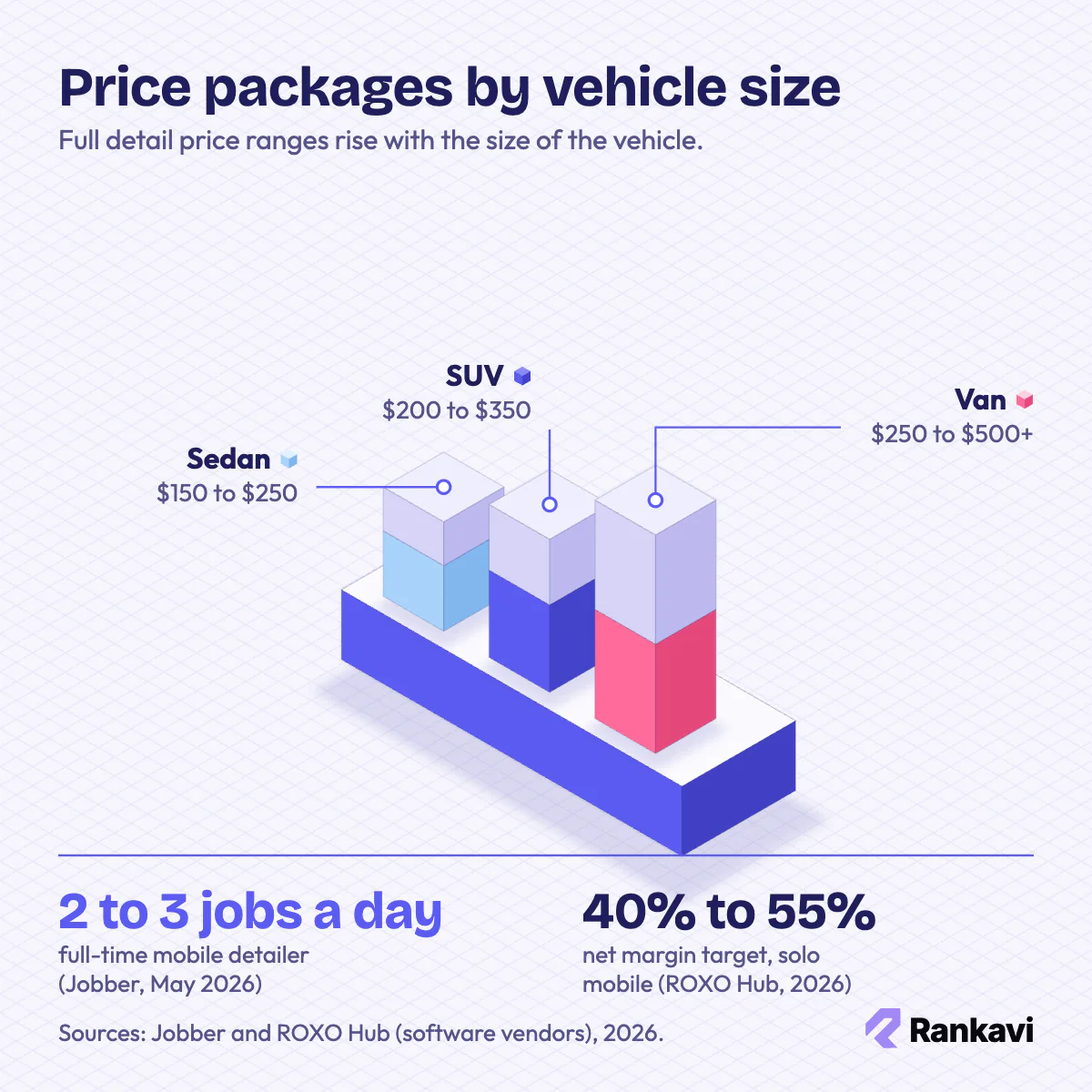
Jobber, which offers field service software to detailers, listed full details at $150 to $250 for a sedan in April 2026. The same 2026 vendor guide put a full-size sport utility vehicle (SUV) at $200 to $350 and a van at $250 to $500 or more.
Add-ons lift the ticket far more than base washes. Jobber’s April 2026 guide listed ceramic coating at $450 to $2,000 and paint correction at $200 to $1,000. Heavy pet hair, sand or stains add a surcharge.
“When people ask for a lower price, I don’t give a lower price. But rather use some add-on services as a way to build extra value.”
— A mobile detailer on the AutogeekOnline forum
Customer type also shapes the price list. Commuters and busy households buy washes and interior details. Luxury and enthusiast owners buy coatings and correction.
Jobs per day is the number detailers check first. Jobber’s May 2026 guide put a full-time mobile detailer at 2 to 3 jobs a day, at $150 to $300 each. Fewer jobs spread insurance and vehicle costs over fewer cars.
Hidden hours lower the real hourly rate. Towel washing, pad cleaning, travel and bookkeeping all take time. ROXO Hub, which offers business software for service trades, set a 2026 target of 40% to 55% net margin for solo mobile detailers. That April 2026 vendor estimate already pays the owner a market wage.
Startup money at a glance:
| Item | Figure |
|---|---|
| Startup cost | $800 to $5,000 on a budget, $5,000 to $15,000 intermediate, $15,000 to $25,000+ professional; a fixed shop $50,000 to $150,000+ |
| Main costs | Equipment and chemicals ($2,000 to $15,000), insurance ($100 to $300 a month), trailer for mobile work ($1,000 to $4,000), license and registration ($75 to $400) |
| Typical margin | 40% to 55% net for a solo mobile detailer, after paying the owner a market wage |
| Time to open | Varies with city permit timing; no national figure exists |
Sources: Jobber and ROXO Hub, software vendors, vendor estimates, April and May 2026; StartCosts, operator-sourced estimates, October 2026.
3. Fund the Starter Kit and Plan
Funding a detailing startup covers the machines, chemicals, insurance and marketing until bookings pay the bills. Most owners start small and buy more as revenue grows.
Jobber’s May 2026 guide set three budget tiers for a new detailing business. A budget start ran $800 to $5,000 in that 2026 estimate. Its professional tier, with a dedicated van, started at $15,000 in 2026.
Personal savings fund many first detailing kits. Family loans and small bank loans fill gaps. The U.S. Small Business Administration (SBA), which offers small loans through nonprofit lenders, caps microloans at $50,000 as of 2026.
Equipment sellers often offer installment plans on detailing bundles. Those plans spread the cost of a vacuum, steamer and pressure washer across months.
Other sources suit different needs. Business credit cards cover supplies but charge high interest on carried balances. Online lenders move faster than banks and usually cost more. SBA microloans come through nonprofit lenders, not from the SBA directly.
Owners can also cut the amount needed. Starting with a personal vehicle and used machines lowers the first bill. Premium gear can wait for repeat customers.
A break-even check shows how many details cover fixed costs. Monthly fixed costs divided by profit per job gives that number. The Service Corps of Retired Executives (SCORE) offers free mentoring that helps with the plan.
A short business plan answers the overhead question before any purchase. It lists services, prices, target customers, rivals, startup costs and a sales forecast. A one-page version is enough to start.
4. Register the Detailing Company
Registering a detailing company gives the business a legal identity that signs work orders, opens accounts and holds insurance. Dealerships and fleet clients often ask for it.
Many detailers form a limited liability company (LLC). One scratched paint job or lost key can bring a claim. An LLC keeps personal savings and the family home apart from that claim.
The Internal Revenue Service (IRS), the federal tax agency, issues an employer identification number (EIN) online for free. Approved applications get the number immediately. The EIN opens a business bank account and later covers payroll.
A separate business bank account and clean records also keep the LLC’s protection intact in court. The trading name can differ from the legal name, such as a holding LLC with a local brand. Domain and social handles should match that brand.
5. Get Local Permits and Wash Water Approval
Getting detailing permits lets the company wash, store chemicals and sell products where it works. Most states have no special detailing license, so local rules carry the weight.
Detailers usually start with a city or county business license. Jobber estimated in May 2026 that a business license and registration cost $75 to $400. A home occupation permit applies when chemicals and machines sit at a home address.
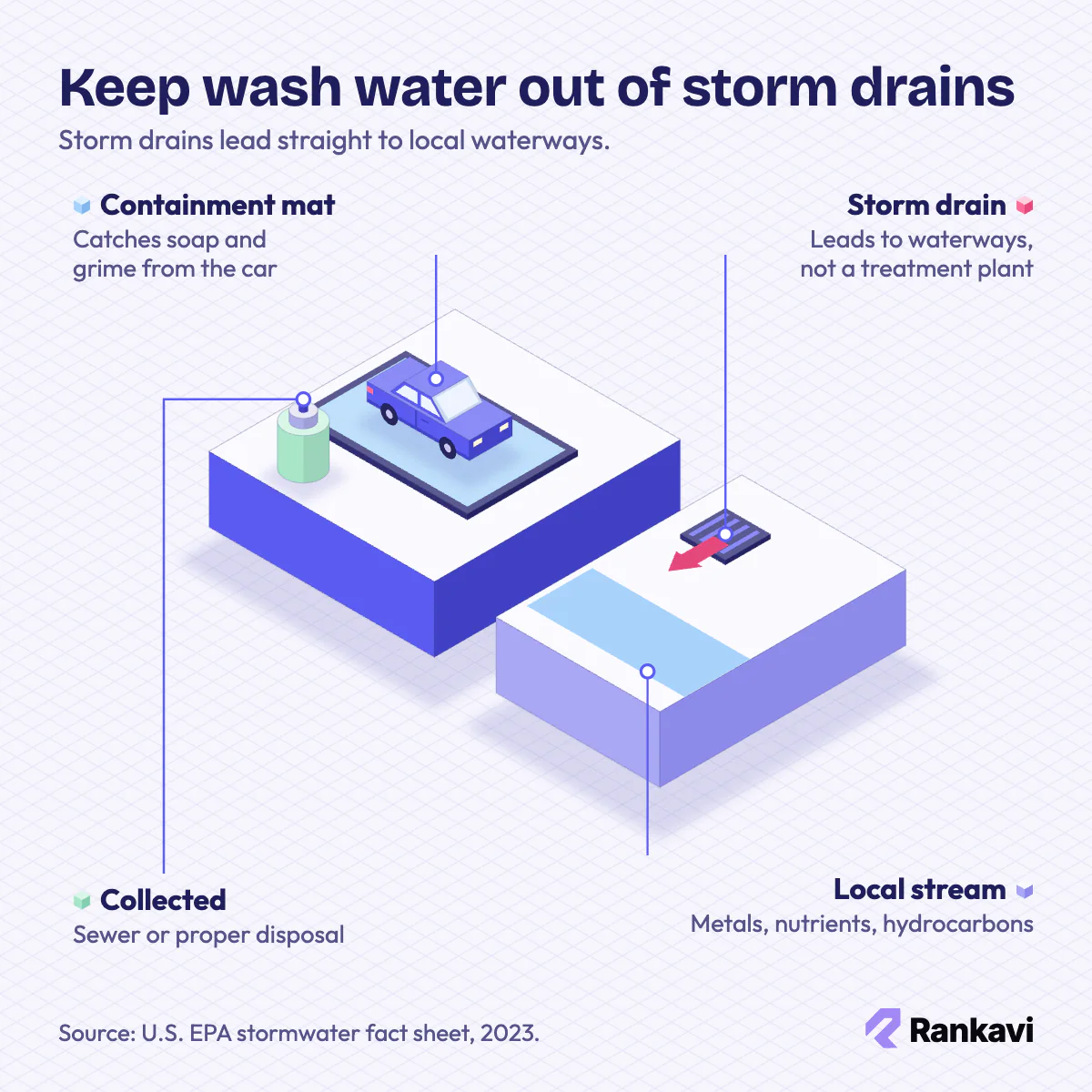
Wash water draws the most attention. The U.S. Environmental Protection Agency (EPA), which sets water pollution rules, warns that storm drains lead straight to waterways. Its 2023 fact sheet adds that wash water can carry metals, nutrients and hydrocarbons.
Detailers use containment mats, waterless products or sanitary sewer drains to keep soap and grime out. Some cities add a mobile car wash permit. Shop owners face zoning checks and drainage rules for the bay.
A sales tax permit covers any products the business resells. Certification stays optional but builds trust. The International Detailing Association, a trade association for professional detailers, runs a written exam and a hands-on skills test. The International Detailing Association calls them Certified Detailer and Skills Validation.
6. Insure Customer Cars and the Rig
Insuring a detailing business protects the owner from claims for scratched paint, damaged interiors and job site injuries. Jobber put business insurance at $100 to $300 a month in its May 2026 guide.
General liability covers injuries and property damage to third parties. A customer who slips on a soapy driveway falls under this policy.
Garagekeepers coverage pays for damage to customer cars in the detailer’s care. General liability usually excludes those cars. A photo inspection before each job also defends against false damage claims.
Commercial auto covers the work van or truck. Personal auto policies often exclude business use. Workers’ compensation follows once the first employee joins.
7. Buy Pressure Washers, Polishers and Chemicals
The service menu decides the equipment list. A wash and wax kit costs far less than a paint correction setup.
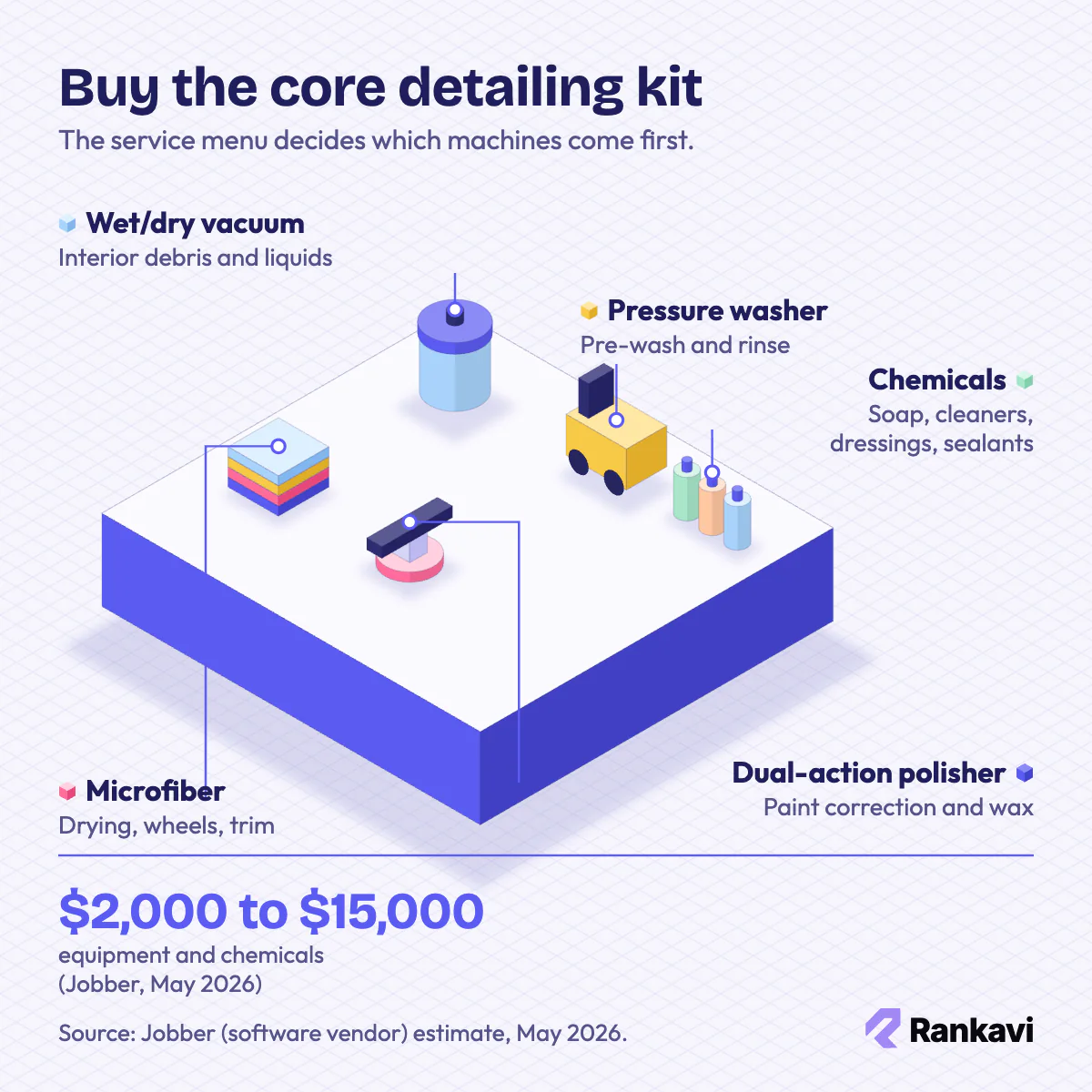
Core detailing equipment:
| Item | Job it does |
|---|---|
| Pressure washer and foam cannon | Pre-wash and rinse |
| Wet/dry vacuum | Interior debris and liquids |
| Hot water extractor or steamer | Carpets, seats and stains |
| Dual-action polisher | Paint correction and wax |
| Microfiber towels and brushes | Drying, wheels and trim |
Chemicals follow the same menu. Car wash soap, all-purpose cleaner, wheel cleaner, glass cleaner, tire dressing and sealants cover most jobs. Products that work in direct sun matter for mobile detailers.
Mobile rigs add a water tank, a generator and a hose reel. A dedicated, branded vehicle looks more professional than a personal car. Pickup trucks, SUVs and cargo vans all serve as a base.
“You can’t start a small business with high overhead, you will fail. You don’t need every toy under the sun to do a good job”
— A detailer on the AutogeekOnline forum
Scheduling software keeps the day organized once bookings grow. Detailing apps handle estimates, bookings, reminders, invoices and payments in one place.
8. Market to Local Drivers and Dealerships
Google Business Profile is a free listing that puts a business on Google Maps. Detailers pick the auto detailing category, add a service area and upload photos. Early reviews from those first customers build trust fast.
“I blow a lot of my competition out of the water when it comes to my google reviews. It didn’t happen over night, but it helps a lot now.”
— A mobile detailer on the AutogeekOnline forum
Friends and family supply the first jobs. Discounted or free add-ons win honest reviews and before-and-after photos. Those photos then feed the website and social pages.
Referral partners for detailers:
| Partner | Why they refer |
|---|---|
| Used car dealers | Cars need reconditioning before sale |
| Body shops and mechanics | Customers want a clean car back |
| Real estate and office managers | Staff perks and on-site services |
| Car clubs | Owners who care about paint |
Nextdoor is a neighborhood social network where residents ask for local services. Flyers, door hangers and Facebook groups reach nearby drivers too. A branded van parked at each job advertises to the whole street.
9. Hire Detailers and Add Premium Services
Growth starts when the owner turns work away. A first hire only helps when the owner can train them and check every car.
Wages set the cost of that hire. BLS reported a median wage of $17.23 an hour for cleaners of vehicles and equipment in May 2025.
Clear checklists keep quality steady across a crew. Each package gets written steps, product choices and a final inspection. Photos at handover protect the business and show customers the result.
Premium services raise revenue without more cars. Paint protection film and multi-year coatings carry far higher prices than a wash. They also demand more training and a clean, covered space.
Repeat work steadies the calendar. Monthly maintenance plans keep coated cars clean. Dealers and local fleets send batches of vehicles on a schedule.
10. Appear in Google AI Mode Detailing Answers
Drivers now ask AI tools where to get a car detailed nearby. Google AI Mode, ChatGPT and Gemini reply with named detailers. Those replies draw on review sites, local directories and “best detailer” lists.
A new detailing business gains from appearing on those pages early, while its own review count is still small.
Rankavi is a software as a service (SaaS) platform that publishes brand mentions in articles on indexed third-party websites. Each mention costs $12 in the 50-credit pack. Detailers who want AI Mode brand citations can start there.